Shuhei Matsuyama & Tetsuji OhnoHyperbolic Scape
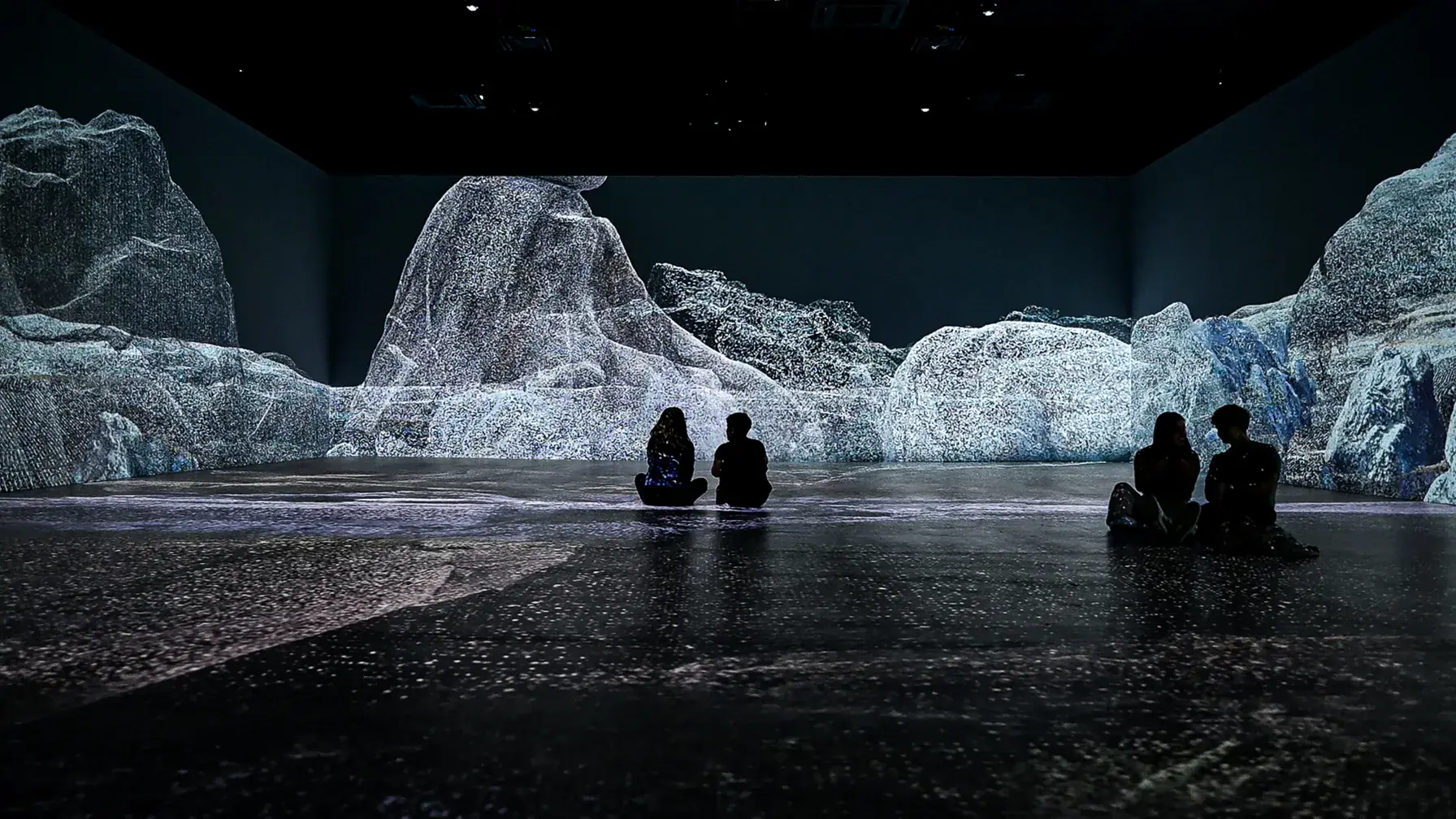
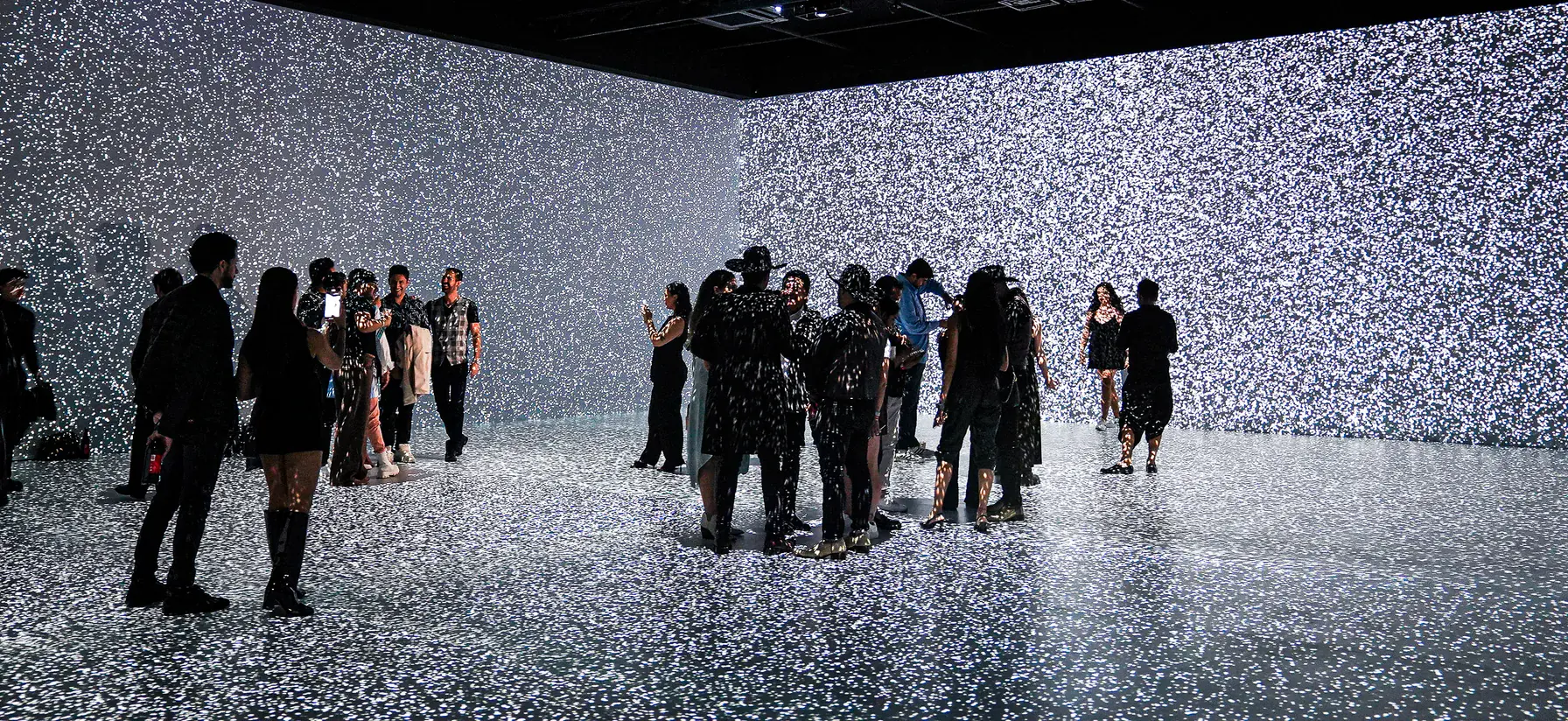
Hyperbolic Scape is an exploration of the underlying spirituality of Japanese culture through the lens of digital technology.
Drawing inspiration from the expressive techniques of karesansui (dry landscape gardens), this work seeks to manifest a distinctly Japanese perception of time and space, as well as the aesthetic sensibility of mitate—the practice of ascribing multiple meanings to objects.
Karesansui is a traditional garden style that symbolizes natural landscapes using sand and stones in place of water, deeply intertwined with Zen philosophy. Established during the Muromachi period, this style employs raked sand to evoke the flow of water, stones to represent mountains and waterfalls, and shakkei (borrowed scenery) to expand the spatial experience. Within these distilled compositions, an infinite sense of time and scale emerges. At its core, this approach embodies fundamental Japanese aesthetic principles such as shukkei (miniature landscapes), mitate (reinterpretation), and shakkei (spatial borrowing).
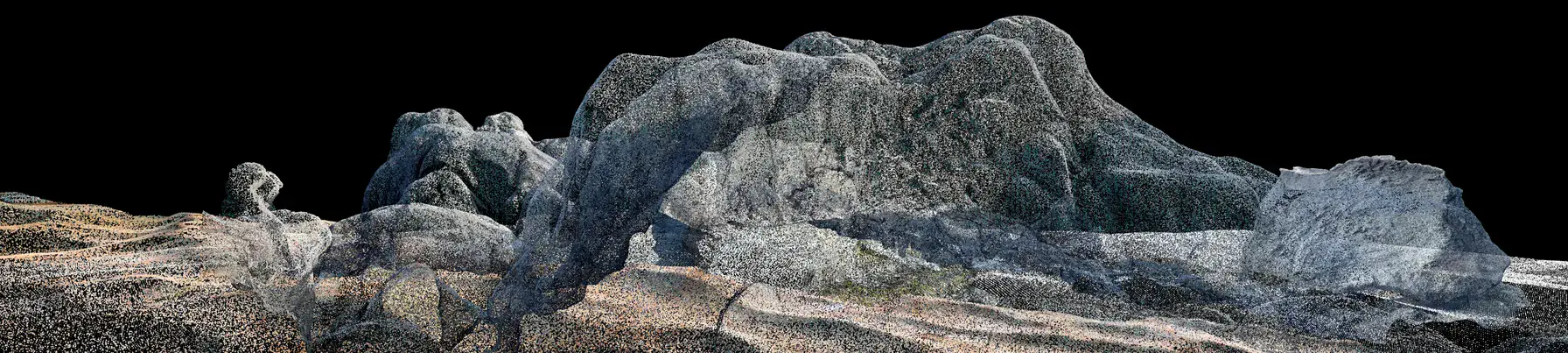
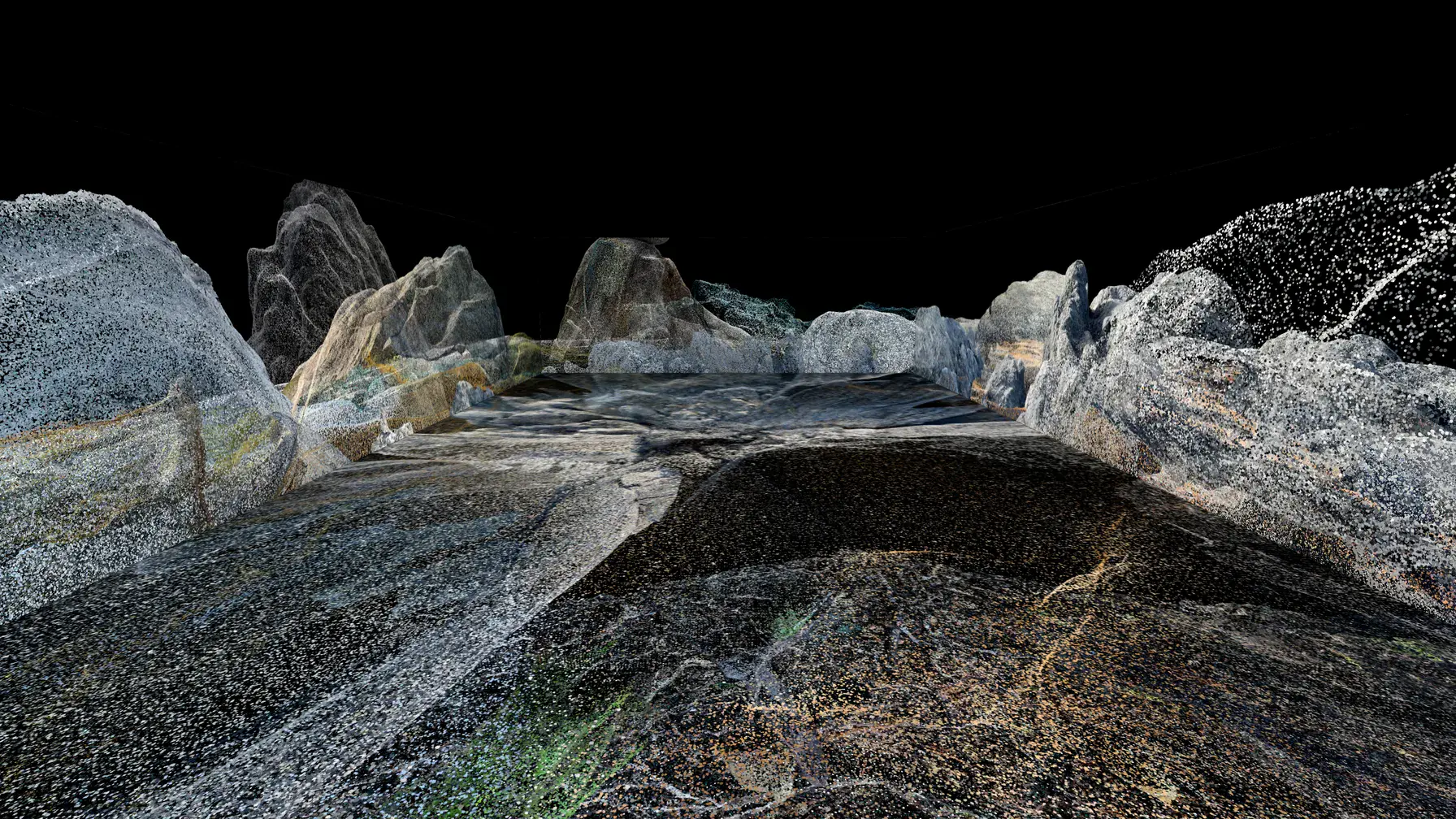
In this work, digital landscaping is composed using 3D scan data from diverse locations across the world, along with satellite imagery.
By leveraging digital technology to transcend physical constraints, Hyperbolic Scape reimagines the possibilities of landscape design, dissolving the conventional boundaries of scale and temporality. The work merges terrain from different historical periods, introduces dynamic transformations, and expands beyond the static nature of traditional gardens.
The objects positioned within this space are not only geographically diverse but also vary in their historical origins, constructing a karesansui that exists beyond conventional frameworks of time and space.
The sound represents the fundamentals of Japanese idea. It is not based on absolute values like 0 and 1, but rather constructed to convey the ambiguity and abstraction that lie between them, using ambient floating sounds, gently evolving timbres, primitive sine waves,and traditional Japanese instruments. The composition is built on sounds that change over time, the goal is not to fill the space by sound number with comfort, to create a minimalism sense of a little instability, this sound aims to reflect on one's inner self.
By reconstructing karesansui—a form deeply rooted in Japanese cultural values—through contemporary digital methodologies, this work asks: Can a modern interpretation of Japan emerge from this synthesis?
Through Hyperbolic Scape, I invite the viewer to engage with their own perceptions and explore this question for themselves.
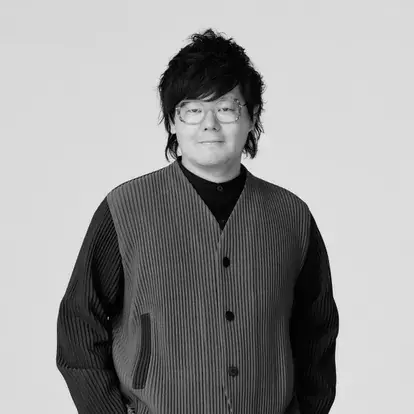
Shuhei Matsuyama (Visual Artist)
In an increasingly diverse society, visual artist Shuhei Matsuyama pursues social implementation through a multifaceted approach that integrates technology, from building frameworks to developing solutions. As both a programmer and a visual artist, he works across a wide range of fields, including art installations, live productions, spatial design, and corporate R&D projects, leveraging cutting-edge technology. He has extensive experience in creating audiovisual works and installation projects using large-scale media control systems.
Matsuyama is a member of the creative label “nor” and presents works exploring the intersection of technology and art. His works have been exhibited and awarded at art festivals and museums in Japan and abroad, including ICC and MUTEK. He is also the author of Visual Thinking with TouchDesigner.
https://www.instagram.com/shuhei.matsuyama/
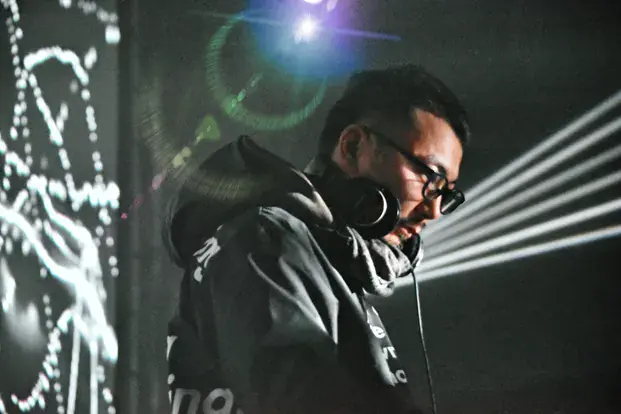
Tetsuji Ohno (Sound Artist)
A Tokyo-based sound/visual artist.
After starting the career as a DJ in the mid-90s, primarily in Tokyo, Ohno began producing music. Alongside the work in commercial music, Ohno launched audiovisual project "triggering" in 2014, which features works generated through visual programming. This sound - shaped by influences from house, techno, noise, and electronica - synchronizes with visuals based on intuitive generative design and color patterns. Ohno primarily performs live internationally.
Notable performances include "MUTEK" (Canada, Mexico, Spain, Tokyo), "Scopitone" (France), "HPL" (Russia), "L.E.V." (Spain), "Sónar" (Portugal), and "WeSA" (South Korea), as well as art festivals and outdoor events like the "Sunscape Festival" (Malta), and installations at festivals such as "FILE" (Brazil), "BRIGHT Festival" (Germany), and "AVA" (Northern Ireland). In addition to the solo work, Ohno has collaborated with Canadian visual artist Push1stop, media artist Shinichi Yamamoto on full-dome projects, as well as Kyoka (from the Raster label), Eiichi Sawado, Shuhei Matsuyama, and many others. Domestically, the work spans TV and commercial music, surround sound design for major national facilities, sound development for in-car navigation systems, and creating interactive content for commercial spaces- connecting the senses through sound in innovative ways.
Concept, Visual Programming: Shuhei Matsuyama
Sound Design: Tetsuji Ohno
054F | Tatami
Ticketed Area